
B
O
S
S
A
U
T
O
Loading
How E-Mobility, Packaging, and Medical Demand Are Reshaping Injection Moulding in India
11
Aug
How E-Mobility, Packaging, and Medical Demand Are Reshaping Injection Moulding in India
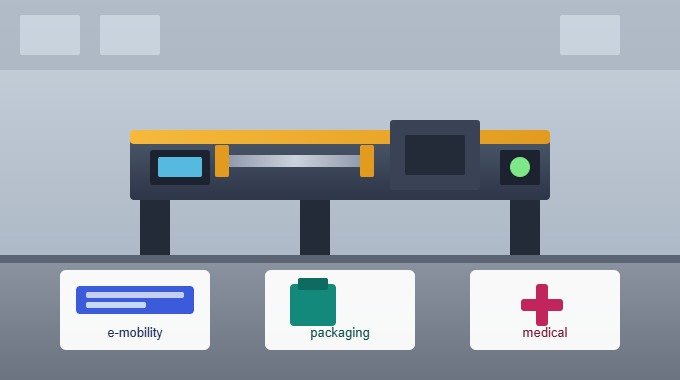
Three years ago, most Indian moulders could get by with a solid all-rounder machine and a handful of standard tools. That's changing fast. Electric vehicles, smart packaging, and medical-grade plastics are no longer niche verticals — they're becoming the biggest growth drivers in the industry, and each one is pulling machine design in a slightly different direction. If you're planning capacity for the next few years, understanding these shifts matters more than chasing tonnage alone.
E-Mobility: Precision Meets Scale
India's EV push has moved past pilot projects. Two-wheeler and three-wheeler OEMs are now placing volume orders, and that's changing what they expect from a moulding partner.
What's different:
- Battery housings and connector components demand tight dimensional tolerances and flame-retardant material compatibility — a wider process window than most automotive interior parts ever needed.
- Lightweighting is a real cost lever in EVs, since every gram saved extends range. This is pushing demand for machines that handle glass-filled and engineering-grade resins without excessive wear.
- Servo-driven, high-repeatability machines are becoming the norm rather than the premium option, because EV component tolerances leave less room for shot-to-shot variation.
For manufacturers eyeing this space, the entry point isn't necessarily a bigger machine — it's a more precise one, with strong shot control and repeatability built in from the start.
Packaging: Speed and Sustainability, Together
Packaging has always rewarded speed. What's new is that speed now has to coexist with lighter material usage and recyclability targets, which used to pull in opposite directions.
Where the pressure is showing up:
- Thin-wall packaging (think food containers and caps) needs faster cycle times and cooling efficiency, since even small delays multiply across high-volume runs.
- Material downgauging — using less plastic per part without sacrificing strength — requires machines with finer injection control, not just raw clamping force.
- IoT-enabled production lines are gaining traction among larger packaging converters, who want real-time visibility into cycle consistency and downtime across dozens of machines running in parallel.
For packaging manufacturers, the machines that win here are the ones that combine high-speed cycling with the control precision to hold thinner walls consistently — not just brute output.
Medical: Zero Tolerance for Variation
Medical moulding operates under a different rulebook entirely. A part that's "close enough" in most industries simply isn't acceptable here.
Key requirements shaping machine choice:
- Clean-room-compatible processes and strict contamination control, which affects everything from barrel design to how material is handled on the shop floor.
- Consistent, monitored cycles, since medical components often require full traceability — every shot needs to be documented, not just produced.
- Tight tolerance on small, complex parts like connectors, housings, and diagnostic components, where even minor flash or short shots can mean a rejected batch.
This is a segment where the machine's repeatability and monitoring capability often matter more than its size. Manufacturers entering medical moulding should budget for process control and documentation capability, not just the machine itself.
What This Means for Your Next Machine Purchase
The common thread across all three sectors is the same: precision and consistency are becoming table stakes, not premium features. A machine bought purely on tonnage and price, without attention to servo control, repeatability, and process monitoring, will struggle to compete for this newer, higher-value work — even if it handles standard jobs perfectly well.
If your current lineup is built for general-purpose production, it's worth asking a few questions before your next order comes in from an EV, packaging, or medical customer:
- Can your machine hold tolerance consistently across a full shift, not just in a test run?
- Do you have visibility into cycle-to-cycle variation, or only total output?
- Is your material handling set up for engineering-grade or contamination-sensitive resins?
These sectors aren't going away — if anything, they're where the growth in Indian plastics manufacturing is concentrated right now. Machines that are built for high-speed, energy-efficient, and precise operation are the ones positioned to serve all three without needing a separate line for each.