B
O
S
S
A
U
T
O
Loading
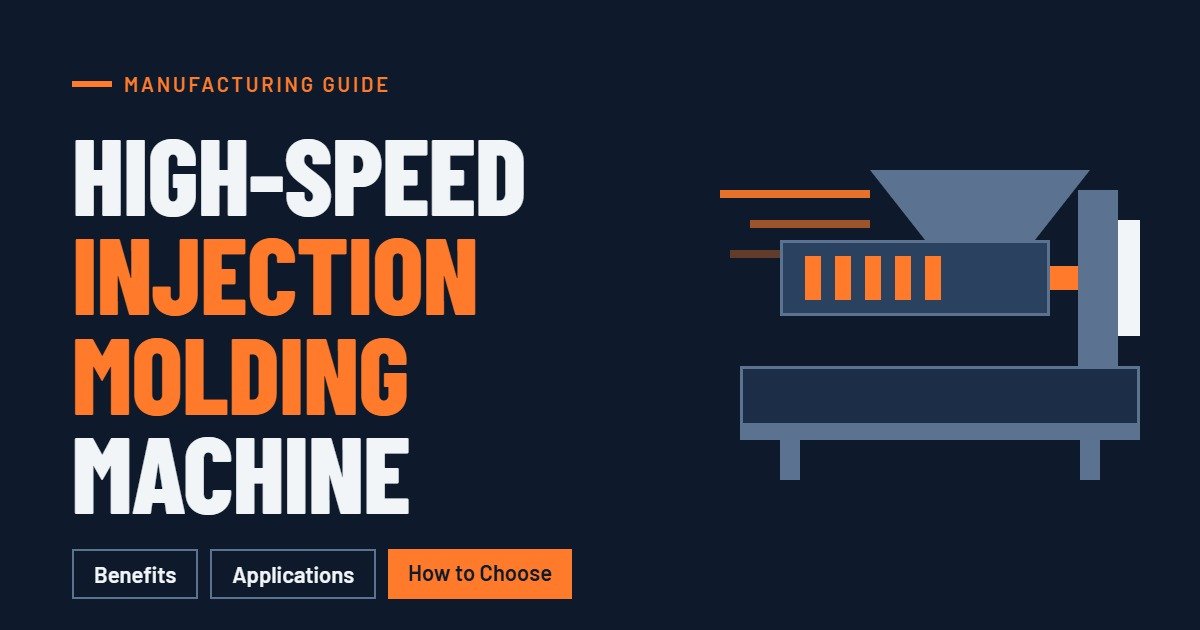
High-Speed Injection Molding Machine: Benefits, Applications & How to Choose
07
Oct
High-Speed Injection Molding Machine: Benefits, Applications & How to Choose
High-Speed Injection Molding Machine: Benefits, Applications & How to Choose
In today's competitive plastic manufacturing industry, production speed, consistency and efficiency are critical for maintaining profitability.
Manufacturers producing large quantities of plastic components often need machines that can deliver fast cycles while maintaining consistent product quality. This is where a high-speed injection molding machine can provide significant advantages.
High-speed injection molding machines are designed to deliver rapid injection and machine movements, making them suitable for applications where high productivity and shorter cycle times are important.
But speed alone is not enough. The machine must also provide the required injection capacity, clamping force, precision, cooling performance and automation capabilities.
In this guide, we will discuss what a high-speed injection molding machine is, its benefits, applications and the key factors to consider before purchasing one.
What Is a High-Speed Injection Molding Machine?
A high-speed injection molding machine is an injection molding machine designed to perform critical molding operations at higher speeds than conventional machines.
The molding cycle generally includes:
Mold Closing → Injection → Holding → Cooling → Mold Opening → Ejection
By optimizing injection speed, machine movements and control systems, manufacturers can potentially reduce cycle times and increase production output.
High-speed machines are particularly useful for products that require:
- High production volumes
- Short cycle times
- Fast injection
- Consistent quality
- Automated production
- High productivity
However, the required machine specifications depend on the product, mold, material and production requirements.
How Does High-Speed Injection Molding Work?
The basic injection molding process remains similar to conventional injection molding.
Step 1: Material Feeding
Plastic pellets are supplied to the machine's hopper.
Step 2: Plasticizing
The material enters the heated barrel, where it is melted and plasticized by the screw.
Step 3: Mold Closing
The clamping unit closes and applies the required clamping force.
Step 4: High-Speed Injection
The molten plastic is injected into the mold cavity at the required speed and pressure.
Step 5: Holding and Packing
Holding pressure is applied to compensate for material shrinkage and help achieve consistent product dimensions.
Step 6: Cooling
The molded product cools inside the mold.
Step 7: Mold Opening
The clamping unit opens the mold.
Step 8: Ejection
The finished product is ejected from the mold.
The cycle then repeats.
Key Benefits of High-Speed Injection Molding Machines
1. Faster Production Cycles
One of the biggest advantages is the potential to reduce cycle time.
Faster machine movements and injection speeds can help manufacturers produce more components within a given production period.
For high-volume businesses, even a small reduction in cycle time can significantly increase overall production capacity.
2. Higher Production Output
When cycle time is optimized, the machine can produce more parts per hour.
This can be particularly beneficial for industries manufacturing thousands or millions of components.
Higher output can help manufacturers:
- Meet large orders
- Improve production capacity
- Increase machine utilization
- Meet delivery schedules
- Improve manufacturing efficiency
3. Suitable for High-Volume Production
High-speed injection molding machines are particularly suitable for applications where large quantities of identical plastic products need to be manufactured consistently.
Typical examples include:
- Packaging components
- Food containers
- Caps and closures
- Thin-wall products
- Household products
- Electrical components
- Consumer products
4. Consistent Product Quality
Speed must always be combined with precise control.
Modern high-speed machines can provide controlled injection speed, pressure and machine movement.
Consistent process parameters can help manufacturers achieve more uniform products throughout a production run.
5. Better Production Efficiency
A well-configured high-speed injection molding machine can help manufacturers make better use of available production time.
Improved efficiency can come from:
- Shorter cycles
- Faster machine movements
- Automated processes
- Consistent operation
- Reduced manual intervention
The actual efficiency improvement depends on the complete molding system and application.
High-Speed Injection Molding Machine Applications
High-speed molding technology is used across several industries.
Food Containers
High-speed machines can be used for manufacturing products such as:
- Food containers
- Lids
- Storage containers
- Disposable packaging
- Plastic cups
These applications often require high production volumes and consistent dimensions.
Packaging Products
The packaging industry requires large quantities of plastic components.
Applications may include:
- Caps
- Closures
- Containers
- Packaging components
- Thin-wall packaging
High-speed production can help manufacturers meet large-volume requirements.
Household Products
Many everyday plastic products are manufactured using injection molding.
Examples include:
- Kitchen accessories
- Storage products
- Household components
- Plastic handles
- Utility products
Electrical Components
Injection molding is widely used to manufacture plastic parts for electrical and electronic applications.
Examples include:
- Switch components
- Connectors
- Housings
- Covers
- Electrical enclosures
Precision and consistency are important for these applications.
Consumer Products
High-speed molding machines can also be used for various consumer products where large production volumes are required.
High-Speed vs Conventional Injection Molding Machine
| Feature | High-Speed Machine | Conventional Machine |
| Injection Speed | Higher | Standard |
| Cycle Time | Potentially shorter | Standard |
| Production Output | High | Moderate to high |
| High-Volume Production | Highly suitable | Suitable |
| Automation | Highly suitable | Suitable |
| Precision Control | Advanced depending on configuration | Standard to advanced |
| Application | High-productivity applications | Wide range of applications |
| Initial Investment | Can be higher | May be lower |
The actual performance depends on machine specifications, mold design, material and production conditions.
High-Speed Injection vs High-Speed Production
It is important to understand that high injection speed does not automatically mean high production output.
Total cycle time depends on several factors:
Cycle Time = Mold Closing + Injection + Holding + Cooling + Mold Opening + Ejection
For many plastic products, cooling time can represent a significant portion of the overall cycle.
Therefore, simply increasing injection speed may not significantly reduce total cycle time if cooling or another stage remains the limiting factor.
A successful high-speed molding solution requires optimization of the complete production process.
Factors to Consider Before Buying a High-Speed Injection Molding Machine
1. Injection Speed
Check whether the machine provides the injection speed required by your product and mold.
High-speed applications may require rapid and precisely controlled injection.
2. Clamping Force
The machine needs sufficient clamping force to keep the mold closed during injection.
The required tonnage depends on:
- Projected area
- Number of cavities
- Material
- Injection pressure
- Mold design
Selecting the correct tonnage is essential for stable production.
3. Injection Capacity
Make sure the machine can provide sufficient shot capacity for:
- Product weight
- Runner weight
- Number of cavities
- Material requirements
A machine with high injection speed but insufficient injection capacity may not be suitable for the application.
4. Mold Design
The mold plays a major role in high-speed molding performance.
Consider:
- Number of cavities
- Runner design
- Gate design
- Cooling system
- Mold material
- Ejection system
An optimized mold can help the machine achieve better production performance.
5. Cooling System
Cooling can be one of the most important parts of the molding cycle.
An efficient cooling system can help:
- Reduce cycle time
- Improve dimensional stability
- Increase production output
- Maintain product quality
Machine selection should therefore be considered together with mold and cooling-system design.
6. Plastic Material
Different plastics require different processing conditions.
Materials such as PP, ABS, PET, PVC and engineering plastics can have different requirements for:
- Temperature
- Injection pressure
- Injection speed
- Cooling
- Screw configuration
Always ensure that the machine configuration is suitable for the material being processed.
High-Speed Machine and Automation
High-speed molding is often combined with automation to maximize production efficiency.
Depending on the application, manufacturers may integrate:
- Robotic part removal
- Automatic material feeding
- Conveyors
- Automatic counting
- Vision inspection
- Packaging systems
- Centralized material handling
Automation can reduce manual intervention and improve production consistency.
For manufacturers planning long-term expansion, choosing a machine that can integrate with automation can be an important consideration.
High-Speed and Servo Injection Molding Technology
High-speed machines can also incorporate servo technology.
A servo injection molding machine can provide advantages such as:
- Efficient motor operation
- Precise control
- Optimized power consumption
- Reduced operational noise
- Improved control of machine movements
Combining high-speed performance with efficient drive technology can be attractive for manufacturers looking for both productivity and operating efficiency.
However, the right configuration depends on the specific production application.
Is a High-Speed Injection Molding Machine Right for Your Business?
A high-speed machine may be suitable if your business has:
✔ Large production volumes
✔ Short cycle-time requirements
✔ High productivity targets
✔ Automated production requirements
✔ Thin-wall or fast-filling applications
✔ Consistent product quality requirements
✔ Long daily machine operating hours
If your production volume is relatively low, a conventional machine may provide sufficient performance without the additional investment associated with high-speed technology.
Common Mistakes When Choosing a High-Speed Machine
Choosing Speed Without Considering the Mold
A high-speed machine cannot compensate for an inefficient mold design.
Ignoring Cooling Time
Faster injection does not necessarily mean a faster complete cycle.
Selecting Insufficient Tonnage
The machine must have sufficient clamping force for the mold and product.
Ignoring Energy Consumption
High productivity should also be evaluated alongside operating efficiency.
Not Considering Automation
If future production will involve automation, machine compatibility should be considered before purchase.
Focusing Only on Purchase Price
The machine's total cost of ownership should include:
Machine Cost + Energy + Maintenance + Downtime + Service + Production Efficiency
How to Choose the Right High-Speed Injection Molding Machine
Before making a purchase, evaluate the following:
Product
- Product dimensions
- Product weight
- Wall thickness
- Material
Mold
- Mold size
- Number of cavities
- Runner design
- Cooling system
- Ejection requirements
Machine
- Clamping force
- Injection capacity
- Injection speed
- Injection pressure
- Screw specifications
- Control system
Production
- Required output
- Target cycle time
- Daily operating hours
- Automation requirements
Long-Term Costs
- Energy consumption
- Maintenance
- Spare parts
- Service support
- Machine lifespan
Why High-Speed Injection Molding Is Important for Modern Manufacturing
Plastic manufacturers are under constant pressure to improve productivity while maintaining quality and controlling costs.
High-speed injection molding technology can help manufacturers achieve higher production capacity when the machine, mold, material and process are properly matched.
The goal should not simply be "faster injection."
The real goal is:
Faster + Consistent + Efficient + Reliable Production
This approach can help manufacturers build a more productive and competitive manufacturing operation.
Conclusion
A high-speed injection molding machine can be an excellent solution for manufacturers requiring high productivity, shorter cycle times and consistent production.
However, choosing the right machine requires more than looking at injection speed.
Manufacturers should evaluate clamping force, injection capacity, mold design, cooling system, material, cycle time, automation and energy efficiency before making a decision.
When the machine and mold are correctly matched, high-speed injection molding can help manufacturers increase production output and improve overall manufacturing efficiency.
Looking for a high-speed injection molding machine for your production requirements?
Boss Automation offers injection molding machine solutions designed around different manufacturing requirements. Discuss your product, mold, material and production volume with the team to identify a suitable machine configuration.
Frequently Asked Questions
1. What is a high-speed injection molding machine?
It is an injection molding machine designed to provide faster injection and machine movements for applications where high productivity and shorter cycle times are important.
2. What are the main benefits of high-speed injection molding?
The main benefits can include faster cycles, increased production output, improved productivity and suitability for high-volume manufacturing.
3. Which products are suitable for high-speed injection molding?
High-speed machines can be suitable for food containers, packaging components, thin-wall products, household products, electrical components and other high-volume plastic products.
4. Does a high-speed machine always reduce cycle time?
Not necessarily. Total cycle time also depends on cooling, mold opening, ejection, holding and other stages of the molding process.
5. Is high-speed injection molding suitable for high-volume production?
Yes. High-speed machines are particularly useful for applications requiring large production quantities and optimized cycle times.
6. How do I select the right high-speed injection molding machine?
Consider product size and weight, material, mold dimensions, number of cavities, clamping force, injection capacity, injection speed, cycle time, cooling requirements, automation and energy efficiency.